
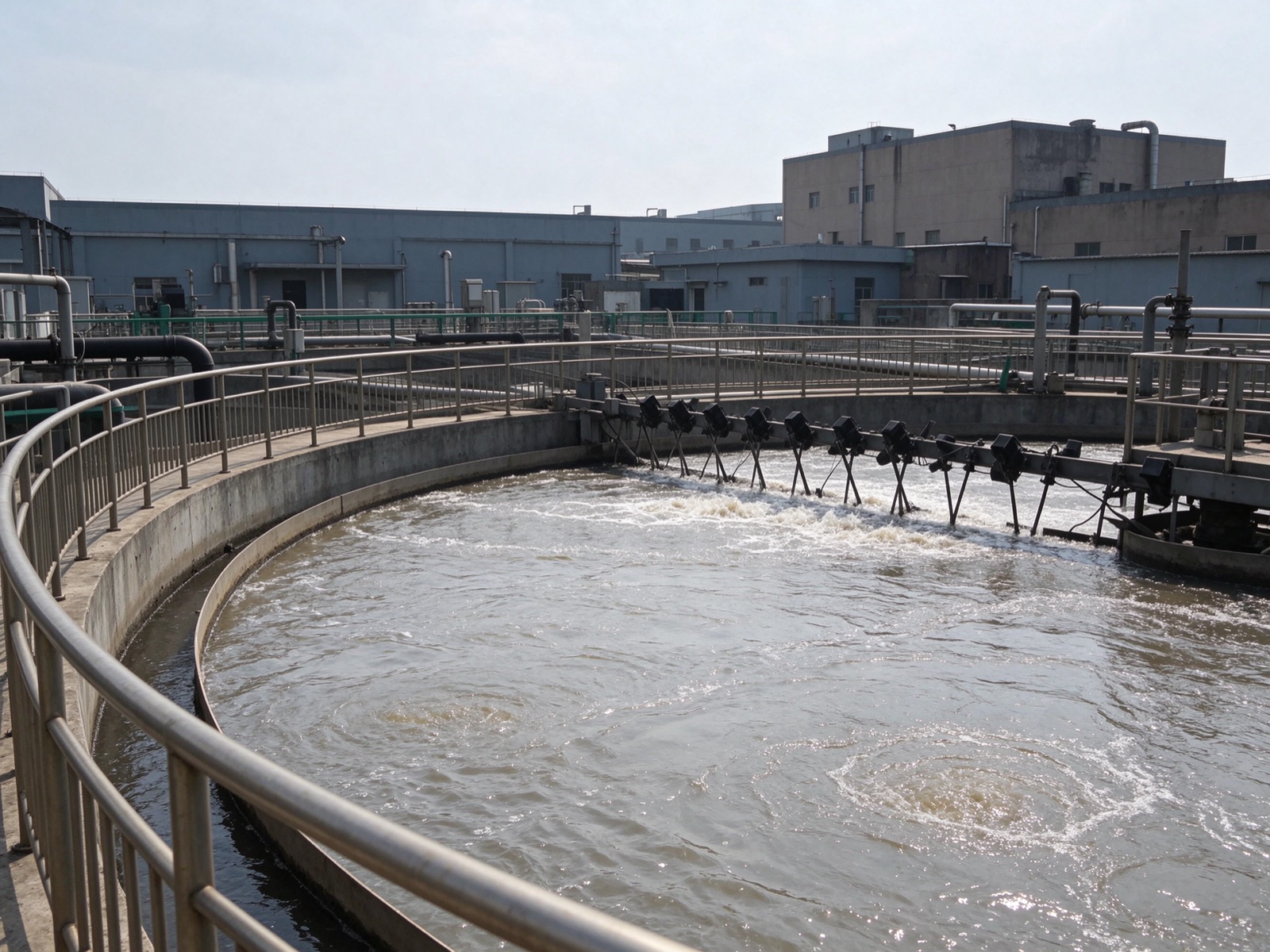

Domestic sewage is predictable: COD around 300–500 mg/L, ammonia nitrogen in the tens, biodegradable organics, stable flow with morning and evening peaks. Industrial wastewater is the opposite — the pollutant may be toxic, the pH may swing, and the flow may stop entirely when the line stops. Treating the two with the same template is the most common design mistake we see.
Domestic sewage: design for the population, not the pipe
Sizing follows population equivalent, water use per capita and the hourly peak factor. An integrated unit with biological treatment and disinfection is usually enough, and the main risks are infiltration into the sewer and grease from kitchens. Keep the unit accessible, screen the inlet properly and the plant will run for years with routine attention.
Industrial wastewater: characterise before you commit
For industrial projects the starting point is a water quality survey over several production cycles, not a single sample. You need to know the ranges, not the averages: pH, COD, BOD, suspended solids, oils, salinity, heavy metals, and whether the stream is toxic to biomass. Pre-treatment — equalisation, pH adjustment, DAF, coagulation or chemical oxidation — is usually where the design is won or lost.
Three structural differences that change the design
- Equalisation: industrial flow and load swing far more, so buffer volume is larger and often the single most valuable tank on site.
- Sludge character: chemical sludge from precipitation or DAF dewaters differently from biological sludge and may need separate handling.
- Discharge route: many factories discharge to a municipal plant under a pretreatment permit, which caps what you may send rather than what you can treat.
What we ask before quoting
Flow rate and hourly peak, the full pollutant list with ranges, production schedule, discharge standard or municipal permit limits, available footprint and whether reuse is planned. With those six answers a reliable process route can be defined — without them, any quotation is a guess.



Leave a Reply